
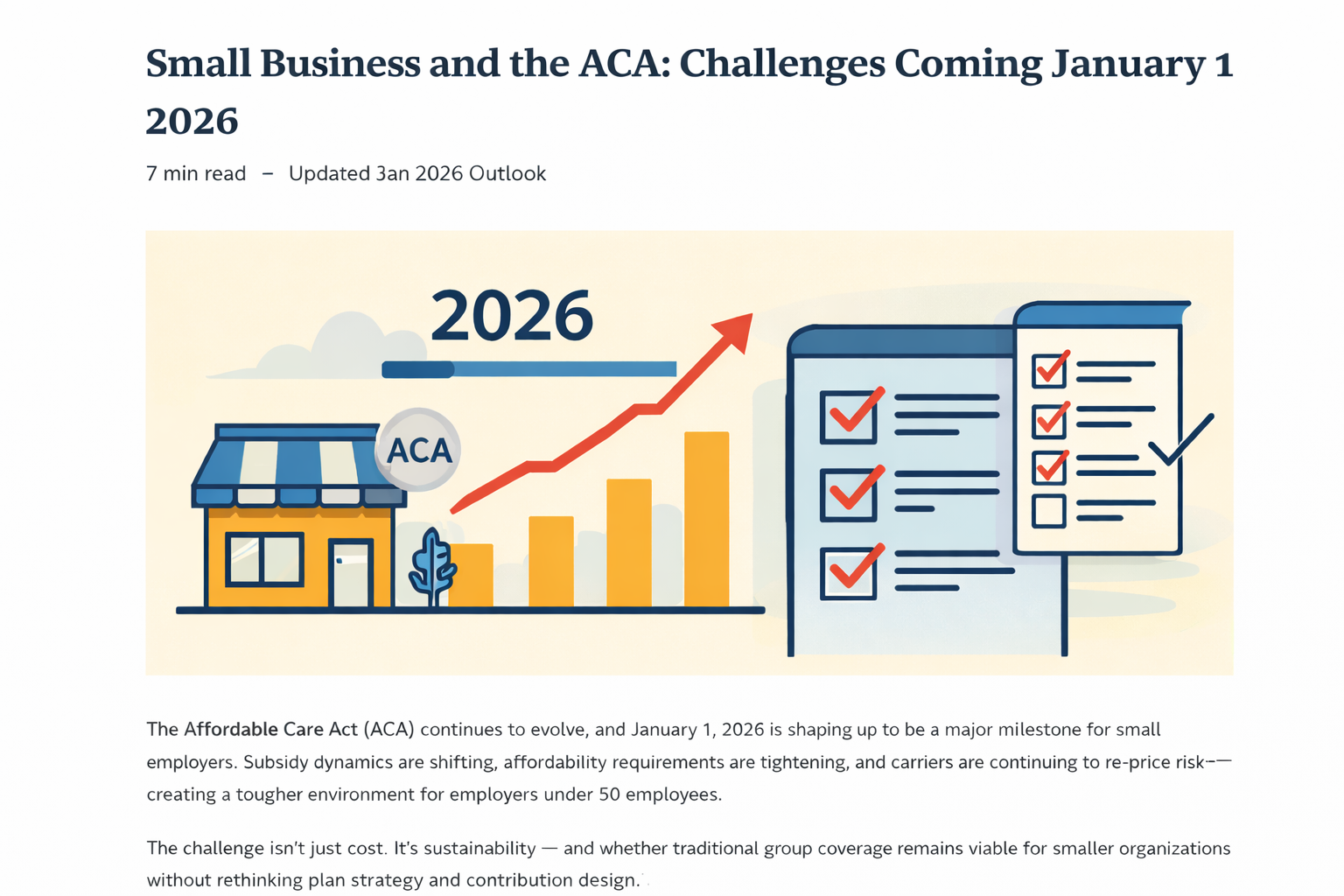
The Affordable Care Act (ACA) continues to evolve, and January 1, 2026 is shaping up to be a major milestone for small employers. Subsidy dynamics are shifting, affordability requirements are tightening, and carriers are continuing to re-price risk — creating a tougher environment for employers under 50 employees.
The challenge isn’t just cost. It’s sustainability — and whether traditional group coverage remains viable for smaller organizations without rethinking plan strategy and contribution design.
📉 Subsidy Shifts: What’s Changing
One of the biggest pressure points is the subsidy environment. As enhanced subsidies phase down:
- Employees may face higher marketplace premiums and become more price-sensitive.
- Small employers feel more comparison pressure as workers evaluate exchange options.
- Contribution expectations rise to remain competitive in retention and recruiting.
In plain terms: when subsidies shrink, employee questions increase — and employer renewal conversations get harder.
📈 Rising Costs and Premium Pressure
Carriers in many markets are signaling meaningful increases, driven by factors that tend to persist:
- Medical inflation: higher provider reimbursements and facility costs.
- Prescription drug pricing: specialty drug spend continuing to rise.
- Utilization trends: preventive care, behavioral health, and chronic management expanding.
Small groups often have fewer carrier choices and less pricing leverage — so “sticker shock” hits harder.
⚖️ Affordability and Compliance Challenges
The ACA affordability requirement is another pressure point. If the affordability threshold tightens in 2026:
- Employer contributions may need to rise to keep coverage within affordability limits.
- Plan design decisions get more technical (especially with variable-hour workforces).
- Non-compliance risk increases for employers that don’t review their structure carefully.
Affordability isn’t only about avoiding penalties — it’s also about staying competitive for talent.
🔎 Market Dynamics We’re Seeing
- Carrier consolidation: fewer small-group offerings in certain regions.
- Growth of level-funded options: predictable monthly costs with refund potential.
- Higher benefit expectations: telehealth and mental health are now “baseline,” not extras.
For many employers, the market is shifting from “pick a plan” to “pick a strategy.”
🏭 A Real-World Example
A 35-employee manufacturing firm faced a 14% renewal increase heading into 2026. As subsidies declined, several employees found exchange coverage cheaper than the employer option. To remain competitive (and reduce disruption), the employer increased contributions — cutting into operating margin.
The conversation shifted quickly from “which plan” to “can we afford to offer coverage at all?”
🚀 The Bottom Line
January 1, 2026 marks a turning point. Small employers may be squeezed by:
- Shrinking subsidies
- Rising premiums
- Stricter affordability requirements
The winners won’t be the employers who chase the lowest premium — they’ll be the ones who structure benefits intentionally for affordability, stability, and employee experience.
Want a 2026 readiness check for your group?
A Premier Shield Benefits specialist can help review affordability, plan design, and alternative structures before renewal season forces a decision.
Talk to a Specialist →This article was prepared by HealthPlanBrief.com, an educational affiliate resource dedicated to simplifying health coverage decisions for individuals and businesses. For more insights and updates, visit HealthPlanBrief.com.